Sunday, July 7, 2013

Math + Robotics + Art

On the outside, it seems like math and art have nearly nothing to do with the one another. However, taking the time to think about it has allowed me to realize how important math concepts are to artists. This comes in the form of proper measurements, geometrical shapes, and the computational methods that allow for fractals for example. According to Nick Gessler, we can even track cultural changes using technology. This, of course, would require computational power which is just another word for math.
Fractal
I believe that math gives art more structure and organization than it would normally have. They go hand in hand even if it doesn't seem so to the naked eye. Another example of how art and math intertwine is through origami. Robert J. Lang has created hundreds of designs and is considered a master in this field. Geometrical shapes and precise measurements are required for these pieces of art. 
Origami
This leads us to concept of robotics and the arts. Before there can be robots, there must be mass production which started with Gutenberg's movable type. This is the beginning of a time of transition where, slowly, printing lead to more advanced electronics to eventually what is now known as the internet. Robots must have computational abilities and these are known as cyborgs or cybernetic organisms. An example of how this relates to art is through Gordon Pask's cybernetic art systems. This machine allows for mood and lighting changes based on the performer for which it is working. I find it very interesting that we are capable of creating technology that can do these tasks for us.
Robotics
Looking at Leonardo Da Vinci's Mona Lisa painting, as mentioned in this week's lecture, has helped me understand the concept of the Golden Ratio in art. This can be explained by looking at a line segment and envisioning that a small section to the larger sections' ratio is equivalent to the larger section to the whole piece ratio. 
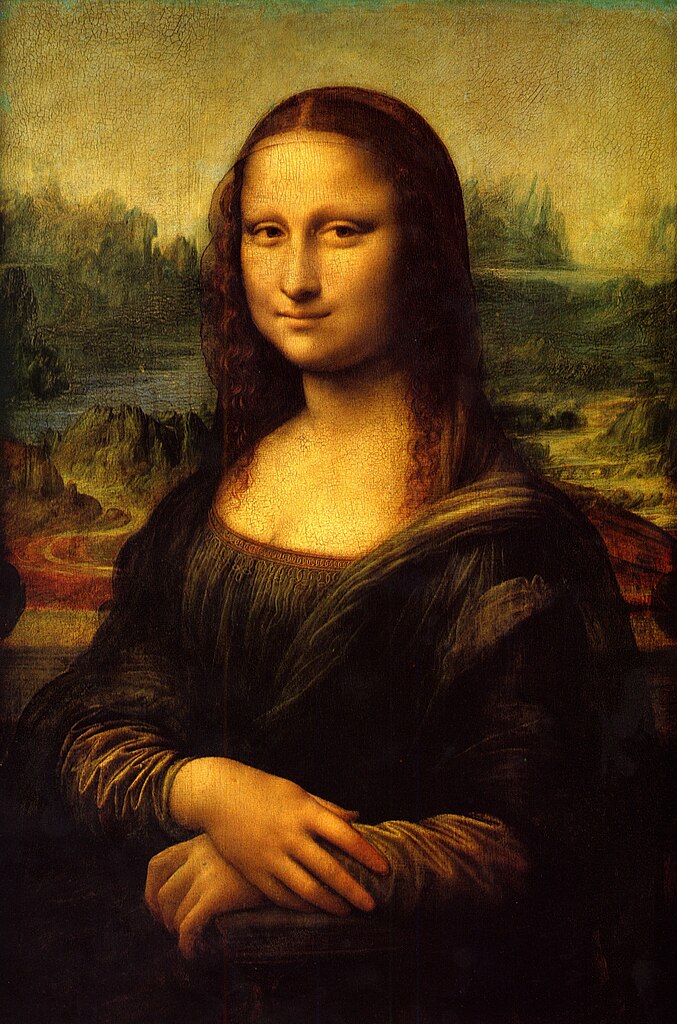
Mona Lisa
Art, science, mathematics, and industrialization are all interrelated concepts in today's world. It is very difficult to find one that does not involve any of the other in this modern age. I would even say that they depend on each other for success. One example of this would be the cellular phone. It must have an aesthetic appearance (small, lightweight, pleasing to look at), it must have computational power which requires mathematics, and it is created on an assembly line. 

Citations:

Gessler, Nicholas. Interview by Margaret Wertheim. Things That Think: An Interview With Computer Collector Nicholas Gessler 2006. Cabinet. . Print. http://www.theiff.org/publications/cab21-gessler.html.

Lang, Robert J. "About the Artist." Robert J. Lang Origami. N.p., n.d. Web. 7 Jul 2013. <http://www.langorigami.com/>.

Vesna, Victoria. "Robotics Art." DESMA 9. University of California, Los Angeles. Los Angeles, California. 2012. 

Norman, Jeremy. "From Gutenberg’s Movable Type to the Digital Book, and Other Studies in the History of Media." From Cave Paintings to the Internet. Jeremy Norman & Co., Inc., 6 Aug 2011. Web. 7 Jul 2013. <http://www.historyofinformation.com/narrative/index.php>.

Da Vinci, Leonardo. Mona Lisa. N.d. Photograph. WikipediaWeb. 7 Jul 2013. <http://upload.wikimedia.org/wikipedia/commons/thumb/6/6a/Mona_Lisa.jpg/677px-Mona_Lisa.jpg>.

Robot. N.d. Photograph. n.p. Web. 7 Jul 2013. <http://www.quorrischarmyn.com/wp-content/uploads/2013/01/nod32robot.png>.

Paper Cranes. N.d. Photograph. n.p. Web. 7 Jul 2013. <http://api.ning.com/files/rxvLLnWkyLjF74SrXXdTreK2sY01d91ZOnmneW8HqvTKyOmCGOUhDXukTCYz1qYUe9BYbSifQCcFxZ5-a6rWbb8ap-UqSxpl/MabonaOrigami1.jpg>.

Fractal. N.d. Photograph. n.p. Web. 7 Jul 2013. <http://koleksifoto.com/images/wallpapers/31819736/Exclusive/Fractal_Art/Fractal_Art_17.jpg>.

Friday, June 28, 2013

Two Cultures

In looking at the concept of "Two Cultures", I found that John Brockman someone expanded on  but did not completely agree with the ideas of C.P. Snow. In C.P. Snow's book entitled Two Cultures and in a follow up essay, he writes about a possible third culture in which the scientists and artists collaborate with one another. Brockman does not see this as entirely true as he has come to the conclusion that scientist do not necessarily need a middleman to communicate their work to rest of the world. They are capable of doing this themselves. I find John Brockman's view to be true as well but not in every situation. There are certainly some grey areas in which some individuals are literary intellectuals in addition to being scientists.
Relativity, 1953 M.C. Escher
http://seedmagazine.com/images/uploads/13JLMCE600x575.jpg
My version of two cultures comes in the form of my interest in biology in addition to my deep love for history. These are two entirely different subjects but I have grown to appreciate that biology gives me an understanding of how life came about in scientific terms. On the contrast, history allows me to explore the past and look at all the ways that people have viewed many different concepts in addition to how it has changed over the years.
http://1.bp.blogspot.com/_1xvEOICRwA/TQ_ejhXnaWI/AAAAAAAAC1I/grwdXGUtS10/s1600/HisSciColl-sm3.jpg

At UCLA, the line between two cultures is very obvious one that comes in the form of North Campus and South Campus. North Campus is known as the home of the humanities majors while South Campus is for science/ math related majors. North Campus seems to have a much more aesthetic appeal to it; there are more trees, fountains, and art sculptures. South Campus is mainly concrete and brick with many high rise buildings.
http://www.housing.ucla.edu/housing_site/guesthouse/gallery/SculptureGarden_RGB.jpg
http://www.environment.ucla.edu/media/images/sam-large.jpg
This perspective of the discrepancy between the two cultures has definitely opened my eyes to not just my immediate world but to the things I have to yet to see or learn. From now on, I will begin to look for  these two cultures because it is apparent that you can find them just about anywhere. As a biology major, I have had my share of the sciences but am now aware that there can be an artistic side to it as well.

Citations:

John Brockman: Matchmaking with science and art 
<http://www.wired.co.uk/magazine/archive/2011/03/start/matchmaking-with-science-and-art>
M.C. Escher, Relativity
<http://seedmagazine.com/content/article/the_future_of_science_is_art/P3/>
Art and Science
<http://1.bp.blogspot.com/_1xvEOICRwA/TQ_ejhXnaWI/AAAAAAAAC1I/grwdXGUtS10/s1600/HisSciColl-sm3.jpg>
UCLA Scultpure Garden
<http://www.housing.ucla.edu/housing_site/guesthouse/gallery/SculptureGarden_RGB.jpg>
UCLA Engineering Building
<http://www.environment.ucla.edu/media/images/sam-large.jpg>